
Category: Travel Page 1 of 3

A Fred in Yorkshire

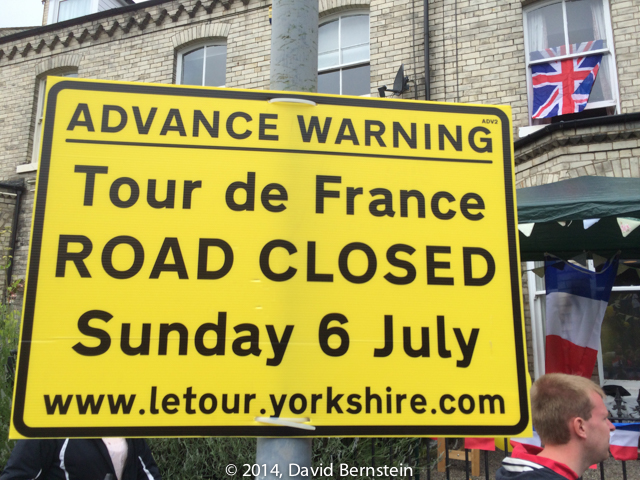
The Tour comes to Yorkshire!

The Tour comes to Yorkshire!

The FredCast at the Tour de France

I hate crowds. Forty years of living in Southern California can do that to a person, but my particular aversion to crowds is especially heightened on Fourth of July weekend. I am fairly certain that this all stems from three specific and identifiable events.

The first was a July 4th weekend handbag sale held at the Wilshire Boulevard location of Saks Fifth Avenue in Beverly Hills. My mother dragged me to this bacchanal of leather, suede and canvas early one morning when I was about seven years old, and believe me when I tell you that hammerhead sharks even in the most intense feeding frenzies have nothing on those (ahem!) ladies.

The second event took place in 1982 when I, along with more that a half million other Southern California residents, spent the night camping on Rogers Dry Lake Bed, adjacent to Edwards Air Force Base to witness the July 4th arrival of the space shuttle Columbia, a speech by President Reagan, and the departure (atop a converted 747) of the space shuttle Challenger. Once these events concluded, we spent hours baking in hot cars trying to exit the sun-baked parking area through a single-lane exit.

And in the third instance, my wife and I foolishly took our 3- and 6-year-old daughters to Disneyworld in Orlando on July 4th, 1999. The park was so overcrowded that day, and Main Street USA so clogged with sweating humanity, that cast members were forced to allow guests “backstage” just so that we could exit the park. To this day, I break out in a cold sweat when I smell cotton candy and sunscreen.

So why, therefore, did this enochlophobic (yes, I looked that up) American intentionally place himself at the epicenter of arguably the largest July 4th weekend crowds he’ll ever experience in his lifetime? Two words: Le Tour!

About a week before the 2014 Tour de France was scheduled to begin, I convinced my wife to allow me to use some of my frequent flier miles and hotel points to spend July 4th weekend in the country from whom America had won its independence more than two centuries earlier. Without waiting for her to change her mind, I immediately set about booking my flights, hotels, and trains.

With the logistics done, I contacted the Amaury Sports Organization (ASO), the owners and organizers of the Tour de France, to obtain the media credentials that would allow me access to the press-only areas at each stage’s start and finish, as well as other areas normally off-limits to the general public, thereby ensuring my avoidance of a crowd. Imagine my disappointment, therefore, when I learned that ASO had closed accreditation days earlier. The press liaison was apologetic, but inflexible, no matter how many strings I tried to pull or connections I tried to exploit. But this was the Tour de France, the holy grail of cycling fandom, so I steeled myself against my fears and forged ahead with my plans.

Fast forward to Saturday, July 5 and I found myself standing in a long queue on a train platform in York, hoping for more room on the next train to Harrogate (the finishing city for Stage 1) than on the previous two trains that had already come and gone. Despite my feelings about being among large masses of people, I am also (perhaps ironically so) an unapologetic people watcher. With nothing else to do but wait, I began to scan the crowd.

Awaiting a train from York to Harrogate with hundreds of my BFFs.

Awaiting a train from York to Harrogate with hundreds of my BFFs.

Scattered among the throng were fans wearing their replicas of the maillot jaune, the yellow jersey that signifies the leader of the Tour de France, others wearing the polka dots of the King of the Mountains, and a smattering of people wearing their pro team jerseys, mostly from the home country favorite Team Sky. These were clearly hard core cycling fans and Freds, all of whom were looking forward to seeing the familiar faces of their pro cycling heroes.

The majority of the would-be passengers, however, were new to the world of professional cycling. I listened to their conversations, and chatted with some of them, learning that they were heading to Harrogate to experience the sights, sounds, emotions, and spectacle of the day, rather than to cheer on any one particular team or rider. These folks were proud to showcase the UK, Yorkshire, its roads, cities and towns, and while they knew the names Cavendish, Froome, and Wiggins — “I hope Sir Bradley wins this year,” one novice confided in me, not knowing the controversy surrounding Team Sky’s roster for this year’s race — they probably couldn’t pick them out of a police lineup.

Just one of the hundreds of decorated buildings in Harrogate.

Just one of the hundreds of decorated buildings in Harrogate.

At long last, the York station staff and the employees of East Coast Main Line railroad (all of whom were wearing yellow polo shirts in honor of the Yorkshire Grand Depárt) mustered an engine and enough carriages to accommodate all of us, and we headed to Harrogate. Once there, I joined a river of humanity flowing through the streets of the city, cutting a path directly to the finish line, eventually emptying into a reservoir of people dammed up by large metal barriers that separate the fans from the race course. Along the way, I passed more yellow bicycles than I could count. It seemed that every home and shop had been decorated in some way to welcome Le Tour to Yorkshire.

Although the peloton wasn’t expected for at least another three hours, the crowd was already 8-deep as far as the eye could see, so I found a spot just fifty meters from the finish line that seemed like it would be a good vantage point. With so many people arriving all the time, I resigned myself to the fact that I shouldn’t move from that spot until well after the conclusion of the day’s stage.

In Harrogate, the proportion of cycling fans to casual spectators mirrored that of the train passengers, and as I looked around the buildings surrounding the finishing stretch all I could see were yellow bicycles, replicas of the Tour’s colorful jerseys, the Union Jack of Great Britain, and people on every roof and patio, or hanging out of every window. Even the churches were adorned in yellow. Clearly, Harrogate had embraced the Tour.

Awaiting the peloton.

Awaiting the peloton.

As we awaited the arrival of the race we were entertained by huge video screens showing the French TV feed from the race course, with its graphics translating, and thereby re-naming, famous English landmarks, much to the amusement of those around me. On-site announcers (in both English and French) provided occasional updates of the situation on the road, including the day’s heroics by fan-favorite Jens Voigt who would end the day in polka dots, despite being the peloton’s oldest racer this year (go forty-somethings!).

Increasing the crowd’s anticipation was the arrival of one of the Tour de France’s most unique and, at times, bizarre spectacles: the promotional caravan. Electro-pop music blared from hidden speakers, as dozens of vehicles-cum-floats adorned with sponsors’ logos, performers, and people throwing all manner of trinkets and souvenirs, zoomed past in a technicolor blur. The loudest applause was saved for Yorkshire Tea, from whose floats volunteers tossed packets of commemorative Tour de France tea to appreciative supporters. This is Yorkshire, after all.

Some time after the advertising cavalcade passed the finish line, Mr. Shutuplegs was absorbed by the chasing horde, and the teams of the sprinters began jockeying for position at the front of the peloton. The cadence and energy of the on-site announcers quickened as the charging racers ticked off the kilometers. Every time it was announced that either Team Sky or Omega Pharma Quick Step had come to the front of the group, the mostly-uninitiated crowd went wild, assuming this meant that surely Chris Froome or Mark Cavendish would win the day’s stage.

Just as the tête de la course entered the outskirts of Harrogate and the cacophony of the hometown crowd reached its zenith, I looked around and realized that the crowd was now at least 25 deep for what seemed a mile in each direction, each body pushing to get closer and closer to the barriers for a better view. Perhaps it was the enthusiasm and friendliness of the people around me, or the excitement I felt at witnessing my first Tour de France in person, but I couldn’t have been more comfortable had I been watching the race from my couch back home.

50 meters from the finish line, after the peloton had passed.

50 meters from the finish line, after the peloton had passed.

It was at that point that several of the people between me and the race course suddenly got taller; it turns out many of them had come prepared with stools and step ladders to ensure that they (but not those behind them) could have a good view of the action. Normally that might infuriate me. This day, however, I laughed in appreciation of their inventiveness.

As the riders passed the flamme rouge, the red flag that signifies the spot one kilometer from the finish line, with the crowd encouraging a single rider, Mark Cavendish, to win the day, Fabian Cancellara attacked the group and for a moment it looked like he might be able to remain clear and steal victory from the Manx Missile. It was then that I heard a voice whispering in my left ear. It was a female voice, and it sounded like she was praying.

“Come on boy! Oh, please let him win! Go Mark! Oh, I hope he wins!”

I looked beside me and saw a woman in her 60s, clearly not a cycling fan, who had wedged her way into the crowd hoping to see a Cavendish win.

Looking back to the big screens, Cancellara was caught and the crowd went wild. The praying of the woman next to me (“come on boy, oh come on!”) was soon drowned out as nearly everyone in the crowd began yelling Cavendish’s name.

And then it happened. Cavendish, perhaps in a moment of lost focus or in his zeal to win here in Harrogate, where his mother lives, went down. Hard. I heard it before I even saw it. No, not the crash, but the sound of a disappointed, concerned nation whose hopes for a Cavendish win here in Yorkshire were dashed just 250 meters from the finish line.

The finish line in Harrogate

The finish line in Harrogate

Within seconds, the peloton zoomed past. From my vantage point it was nearly impossible to see who had won. At that point, in fact, much of the crowd wasn’t even watching; they were too caught up in discussing Cav’s crash, thereby making it impossible to hear the on-site announcers as they excitedly announced Marcel Kittel’s stage win and that he would soon be presented with the race’s first yellow jersey by Kate, Duchess of Cambridge, in her anachronistically green dress.

By the end of the day it was announced that more than one million people had been on-site to view Stage 1, and I would join more than two million for Stage 2 as it wound its way from York to Sheffield. I wasn’t able to attend Stage 3 from Cambridge to London (had to head back home to my day job, unfortunately), but there were millions that day too.

The crowds in York, enjoying a street festival after the start of Stage 2.

The crowds in York, enjoying a street festival after the start of Stage 2.

I thought I knew a lot about bicycle racing and spectating prior to the short time I spent in Yorkshire over Fourth of July weekend 2014. Thanks to my connections in the bicycle industry I have been fortunate to witness multiple Tours of California and Utah from within the race caravan and press areas, providing close-up views of the racers as they gut it out in bad weather, up brutal climbs, and try desperately to maintain breakaways.

On the streets of Harrogate and York, however, I learned that a bike race isn’t just about nearly two hundred people in colorful uniforms on top-of-the-line bicycles. Bicycle racing, like all professional sports, is a show put on for the entertainment and delight of the fans and spectators and sometimes, as it was in Yorkshire last weekend, it is as much a story of those spectators, as it is about the racers themselves. For many of those spectators, it didn’t matter who won or lost. What mattered was that they had become part of an event of superlatives (most watched, most difficult, longest, highest) and that they themselves had become a superlative of their own: most welcoming.

I still hate crowds. In the future, though, if someone suggests that I join a crowd a million or more strong for a French bicycle race in Yorkshire, I would go without hesitation.

Video: Maratona of the Dolomites

Maratona Tour – The Journey Home

NOTE: Today’s photos will be uploaded in a few hours. Come back to see them!

Our van transfer to Bolzano was scheduled to leave at 9:00 AM on Monday morning, so we got the chance to sleep in a little bit before enjoying breakfast and bringing our bags down to the lobby. Enrico and Massimo were there to make the final arrangements, guiding us one last time on this trip, and to ensure that we got off okay. Everyone had a tip and a hug for each of our guides as most of us piled into the van for the two hour drive to Bolzano (Alex and Marlin headed off to Venice in a separate van, while Bruce stayed behind in Corvara to enjoy another two weeks in Italy with his wife Susan).

The shuttle trip to Bolzano was fun, not just because we talked and joked the whole way (which we did), but also because our route to Bolzano traced many of the same roads and passes we had taken earlier in the week, each summit, climb, descent, turn and town bringing back memories which we all shared.

Soon enough we were at the Bolzano train station. Once again it was time for hand shakes, hugs and farewells as well all went our separate ways. I last saw my companions on the curb in front of the station or in the station’s ticketing area.

From Bolzano, I made my way by train first to Verona and then to Milan where I picked up the Malpensa shuttle bus to the airport. Once there, I called my airport hotel to get their shuttle bus to pick me up. I arrived at my overnight hotel near Malpensa nine hours, three buses, and two trains after pulling away from the Hotel Posta Zirm in Corvara. I had dinner in the hotel’s good (albeit overpriced) restaurant.

When you do so much physical activity in such a short period of time, you get used to moving around a lot, so I just couldn’t stay cooped up in the hotel after such a long day of sitting on trains and buses. So after dinner I took a long walk from my hotel into the nearby town of Somma Lombardo where I took some photos of the Castello Visconti and the town’s church. The hotel’s Internet was down so I don’t know the back story of the town, the castle or the church, but I’m committed to finding out.

This morning I awoke, had a cappuccino at the hotel and took the shuttle bus to the airport. Upon checking in I learned that Delta had again upgraded me the entire way home (see what I mean about loyalty?). The upgrade and my status allowed me to breeze through security and gave me a day pass to the airport lounge so that I could have a proper breakfast. Soon enough, it was time to board my flight.

I’m now about halfway through my flight home, cruising at 32,000 feet high over St. John’s, Newfoundland. Coincidentally, I’ll be down there in less than a week for work (back to real life!).

After 7 days, 224 miles on the bike and 31,650 feet of climbing (that’s 141.15 feet climbed per mile), my Italian cycling adventure has definitely come to an end. It has been a wonderful seven days with Ciclismo Classico, the guides, and the other trip participants. I have memories that will last a lifetime, a commitment to return to complete the medium (or the long!) course of The Maratona, and a desire to return on another Ciclismo Classico adventure, this time with Mrs. FredCast (who will likely beat me to the top of every climb).

I hope you’ve enjoyed reading about my adventures on the road and that it has inspired you to take your own cycling vacation, perhaps also with Ciclismo Classico. It has been my pleasure and good fortune to have this opportunity and to share it all with you here and in the podcast. I can’t wait to get home to my family, my friends, my dogs, my work, the podcast, and my own bike. But for now, I think I need to get some sleep.

Buonnanote, amici!

Maratona Tour – Day 7 (The Maratona dles Dolomites)

Today’s Distance: 55.6 KM
Total Distance for the Trip So Far: 390.0 KM
Today’s Climbing: 1,733 meters
Total Climbing for the Trip So Far: 9,644 meters
Today’s Kit: Team FredCast

NOTE:  Scroll all the way to the bottom (it’s a long way down there today) for today’s photos and ride maps/metrics.

The Maratona dles Dolimites begins at 6:30 AM, but the roads between Corvara (location of our hotel) and La Villa (about 6 km away, and the site of the start line) close just after 6:00. Our hotel therefore planned to begin serving breakfast as 4:30 AM since the majority of the people in residence were here for The Maratona.

Everyone in our tour group took it very easy on the  vino last night and went to bed early in order to try to get some needed rest in advance of the race. Despite those precautions, however, it sounds like very few of us actually got more than a few hours of sleep. For some, it was the anticipation on their first large group cycling event. For others, it was nerves about whether or not the climbs could be accomplished and, if so, which of the three courses would be completed. Everyone had their reasons, all of them good ones.

So it was that I found myself getting up at the very uncivilized hour of 4:00 AM to meet my compatriots for breakfast at (yawn) 4:30. A short hour (and lots of coffee) later, I found myself once again mounting a Ciclismo Classico Bianchi Nirone for the ride to the start line. Along with 10,000+ of my closest friends from all over the world.

When you receive your registration credentials for The Maratona, you receive two number plates, both printed with your number and full name. One of these number plates is intended for  the back of your jersey. Enrico cautioned everyone in the briefing yesterday not to put these high up in the middle of your back (between the scapulas) in order to avoid looking like a  sfigato. At first, I thought that sfigato meant Fred, but when I looked it up on Google Translate, I found out that it means  loser. Freds are not losers.

The other number plate is intended for the front of your handlebars and includes a timing transponder that needs to be returned at the end of the race. The number on this plate is surrounded by a field of blue, green or yellow, signifying your ‘starting group.’ I was in the Pinarello (blue) group and therefore had to ride past the start line on a side road (which included a climb, just to taunt me) until reaching a ski area parking lot where I waited, along with thousands of other men. The three women in our group all had yellow numbers, which positioned them between the pros, former pros and top-level amateurs and our Pinarello group. I later learned that about 10% of the starting field were women.

And then the waiting began. Due to the impending road closures, we arrived  at our starting chute before 6:00 AM and the race wasn’t scheduled to begin until 6:30. Meanwhile, we marveled at the eye candy that surrounded us. We estimated that there had to be millions of Euros of bicycles, cycling gadgets, electronics, and kit arrayed before us. Brands we knew, brands we didn’t, and brands we hadn’t seen in years. And this was only one of several starting chutes!

Meanwhile, the Italian network, RAI, had begun their live television and Internet coverage of the event, with no fewer than two helicopters making continuous low passes over the participants waiting at the start line. At first, everyone waved to the camera (I heard several Ciao Mamas! ring out, so I made sure to yell Hi Mom! — although I found out later that only people with an Italian IP address could actually watch the live online coverage, but I did yell it, I promise!), but soon we became bored and went back to drooling over carbon fiber, titanium, etc.

Right at 6:30 AM we heard the countdown in Italian and the race was on!

Just not for us.

Our race didn’t begin until about 10 minutes later when the thousands in front of us finally cleared the Start line and we were able to get on the road. It was a few hundred meters from our starting chute to the actual Start line, and although there were a few people lining the starting area fences, I was surprised not to see more. I would have shot GoPro video of the start line, but somewhere between the chute and the line, the brand new handlebar mount sent to me by GoPro decided to snap and break, further stuffing my already over-stuffed jersey pockets, and leaving me without the ability to shoot POV video during the ride. Very disappointing and very troubling for anyone who relies on this mount to keep their camera safe and sound on their handlebars. I’m sure I’ll have more to say about that on a future podcast but for now, I strongly recommend steering clear of the GoPro bike mount.

Once past the start line it was 6 km back to Corvara and the start of the Passo Campolongo climb. No matter which course you choose to attempt, everyone first does the entire Sellaronda course together, comprising 55 km of the Passo Campolongo, Passo Pordoi, Passo Sella, and Passo Gardena, before returning to Corvara to complete their day or continue on to the Medio (two more passes – Campolongo [again] and Falzarego) or the Maratona (including the dreaded Passo Giau).

I have done a lot of mass participant events, but I have never found myself in such a throng. Because all 10,500+ participants complete the Sellaronda, the road from Corvara and past the summit of the Passo Campolongo was one of the most awe-inspiring and dangerous I’ve ever ridden. From the point of view of a spectator perhaps 100 meters away from the road, I am certain that it must have looked like the road had been transformed into a single, undulating, pulsating, psychedelic, snakelike organism, winding its way up the twisty road toward the summit. From my perspective, however, I saw thousands of cyclists of all abilities fighting for position and enough asphalt to get safely up the road without leaving a piece of themselves thereon.

Had everyone been of the same ability level, the climb up Campolongo and beyond would have been a graceful dance. In reality, however, the discrepancies in abilities, strength, experience, language, etiquette and bike handling skills made for a very stressful first hour or so. Early on, I chose to pick a line along the side of the road, not in the middle of it, and stay on that line. If others wanted to fight for position, let them. I was here to enjoy the ride.

At the top of the Campolongo was a rest stop and I could have used some water. Unfortunately, I was on the right side of the road, the rest stop was on the left, and there was this psychedelic, undulating snake thing in between. So instead, I stopped at the summit just long enough to take a photo and to tweet this first accomplishment, before putting on my wind jacket and heading down the descent to the base of the Passo Pordoi. Once there, I took a few more photos and videos, removed the jacket, and headed up the climb.

The turns/switchbacks on many of the climbs in the Alps are numbered from top-to-bottom or vice versa (how they choose whether to count from the bottom or from the top seems random). On the Pordoi, the turns counted down from the bottom to the top and there were useful kilometer markers indicating the distance to the top, so it was easy to pace myself. Somewhere in the middle of the climb, I stopped into a local bar and asked the proprietor for some water. He was happy to oblige.

On large rides like the Maratona you find a rhythm and a speed, and I typically find that I am among the same group of people for the entire ride. Somewhere along the way we strike up a conversation (this is especially true on charity rides when we compare reasons for riding and what the charity means to each of us) and continue these each time we’re near each other. The Maratona was different because as an Anglophone, I was clearly in the minority. I heard Italian and German, of course, but also Dutch, Flemish, French, Russian and many other languages, but very little English.  Near the top of the Pordoi I ran into a group of Brits, joking their way to the top. It was nice to hear some English being spoken, so I joined in on the joking around. We had a good time together for a few hundred meters before I continued climbing on my own.

Once again we began a descent (after putting on my windbreaker, of course), this time toward the Passo Sella, a climb we had done just a few days previously. We made the turn onto the Sella, I removed my jacket, and headed up the hill. After a few kilometers, I knew I was approaching a rest stop because I heard such a cacophony. Upon making a left turn I found the source of the noise: several men with HUGE cowbells, greeting riders as they approached the rest area. As I approached they were in discussion about something, and just after I passed I found out what they had been discussing. The men formed a gauntlet, with a line on each side of the road. As a ride approached, they began a chant that got louder as the rider got closer, then, as the rider hit the first portion of the gauntlet, they banged their cow bells until the rider was through. It made everyone smile and, yes, hammer just a little bit harder.

The rest area was well-stocked with water, juice, electrolyte powder, wafer cookies (yum), fruit, and Coke. Yes, Coke! This was the first time I’ve ever seen soft drinks at a rest area, but I hope it’s not the last. Caffeine and sugar were a welcome treat.  Alas, however, no Fig Newtons.

Before leaving the rest area I decided that it was time to set this ride to music, so I plugged my headphones into my iPhone, put it on shuffle and hit the road. Somehow my iPhone always seems to find just the right songs for my mood and the ride, and today was no exception. The first song I heard was  Mighty Mighty by Earth, Wind and Fire (no, I am not making this up). Others included  Viva La Vida by Coldplay,  Free Bird, and  Face Up by Rush. I always love it when that song comes on during a ride. Here are my favorite lyrics:

You get all squeezed up inside
Like the days were carved in stone
You get all wired up inside
And it’s bad to be alone
You can go out, you can take a ride
And when you get out on the road
You get all smoothed out inside
And it’s good to be alone!

I sang along, most probably at the top of my lungs. I don’t know how many people heard me singing, but I the music definitely put me in a great mood. My insides were, as Neil Peart said, all smoothed out inside. It was indeed great to be alone, and I was enjoying the ride.

One thing I did not appreciate was the amount of trash left behind by the cyclists. From the base of the Campolongo and all the way back to Corvara, the roads of the Dolomites were strewn with all manner of trash, especially the summits. Gel packages, energy bar wrappers, electrolyte powder packets, even bananas were simply tossed onto the roads, without any concern for whether or who would do the cleanup. The bananas were especially troubling because of their well-known slip-inducing properties, making me wonder whether some hyper-competitive rider had created a Wile E. Coyote Acme bike with the ability to eject banana peels in order to stymie the competition.

But I seem to have digressed.

From the rest area with the huge cowbells, it was back on my bike to the top of the Sella. Somewhere along the way I passed a couple of our amigos de Venezuela, said buenos dias! and ¿como estas? We chatted briefly, wished each other well,  and I continued on my way.

We had descended this portion of the Sella several days ago, so I enjoyed seeing it from a new angle. I am fairly certain that this is the more difficult side to climb, but I preferred it. The view at the top is nothing short of spectacular and I stopped for a moment to enjoy it before putting on my windbreaker again and beginning the fast, but not-too-technical descent (other than the well-marked and -marshaled construction area). Halfway down we made a right turn (I recalled this turn from our earlier climb of this section and also from CycleFilm’s reconnaissance DVD where their rider missed the turn and had to climb back up) for the climb up the Passo Gardena (off with the windbreaker!).

About a kilometer or so up the Gardena I found another rest stop, and this is where I ran into Alex, one of the Americans on our Ciclismo Classico tour. We chatted about how wonderful the day was, the beauty of the scenery, the spread at the rest stop, and whether or not we would make the time cut in Corvara. It was then that I realized that until that moment I hadn’t given the time cuts a second thought; I was just enjoying the ride. I thought that I recalled the time cut being 11:30 or 11:40, so I wasn’t too concerned. I therefore lingered a bit, enjoying the view (and the Coke), and taking my time refilling my bottle of Perpeteuem.

The climb up the Gardena was perhaps my favorite of the day. The crowd had thinned considerably, the climb was not too difficult, and the scenery spectacular (I wonder how many times I’ve used that word to describe The Dolomites). Midway up the climb there is a flat/slight downhill section and then it begins climbing again to a most beautiful summit before descending a fun, fast and technical road into Corvara. At the top, I checked the time and since it was only 11:00, I figured I had plenty of time. Still, I enjoyed a fast descent into town. Before the descent, however, I took the time to tweet, “The four passes of the Sellaronda are behind me. I think I may even make the time cut for the medium course!”

I reached the Finish area where, amazingly, cyclists were already finishing the long route (now that’s fast!). As for me, I spied the chute to the right that would take me back up the Campolongo again so that I could complete the medium route. With Oingo Boingo’s Cry of The Vatos in my ears for motivation, I headed straight for it. But then, without warning, my ride was over. The chute was closed! I had misunderstood the time cuts and missed the cut for the Medium route by less than 10 minutes. I was therefore ushered to the left, through the Finish line. I can’t wait to see my Finish line photo — hopefully there isn’t a video because I don’t think what I said was anything less than R-rated. My race number with the timing chip (the one on my handlebars) was cut off, I was offered a finisher’s hat (or 10 Euros — I took the hat) and a bottle of sports drink.

Just past the Finish line, I stopped and leaned my bike against the barriers. I tweeted saying, “Didn’t make the time cut. Oh well. I still had a great time, and that’s what it’s all about.” I meant it (and still do), but a few minutes later it hit me that my Maratona was over. There I was at the Finish line with the legs to complete the Medium course, but without an opportunity to do so.  I had obviously made a mistake in understanding the time cuts, chosen a pace that was too slow, and stopped too often to take in the scenery, snap photos, and enjoy the rest areas.

Many thoughts and feelings went through my mind at that moment. I was angry at myself for not paying more attention to the time cuts, and disappointed that I hadn’t had the opportunity to tackle one of the longer, more difficult courses. Perhaps paradoxically, I also felt triumphant that I had achieved so much over the past week especially considering my pre-trip fitness, or lack thereof. I realized how fortunate I had been to be able to enjoy The Maratona which, like the Alpe d’Huez, Etape du Tour, and others, is a ride that is on many cyclists’ bucket lists. I also had the great pleasure to not only see The Dolomites, but to spend time in, on, and around their grandeur. Finally, I was extremely thankful to Ciclismo Classico for putting together such a well-organized journey and allowing me to meet and spend time with such a wonderful group of cyclists and guides. It was a flood of emotions that was (and still is, even two days later) difficult to contain.

For a while, I just stood there, alone with my thoughts and emotions, oblivious to the celebrations around me. Slowly, however, I came out of my fog. It was then that I ran into Alex again.  He told me that he had just made the time cut, but after climbing a few hundred meters past the Finish line, he began to think what a beautiful day it had been, how satisfied he was with his ride, and how he no longer felt the need to do more than the Sellaronda. Back down the foot of the Campolongo he went, and through the Finish line. He was jubilant and it was contagious.

Together, Alex and I searched for the ice arena, the site of the post-ride meal, and the location for picking up our finisher’s vests. We didn’t think the signage was as good as it could have been so we wandered around aimlessly for a while, along the way running into a quartet of American wives/girlfriends who were waiting for their husbands/boyfriends to finish the race. One of them was married to a man named Fred, so she took a bunch of photos of me and my jersey. I guess it’s time for me to think about making a new batch so if you’re reading this, Fred, stay tuned!

We finally found the ice arena. In place of ice, the rink was covered with long picnic tables filled with cyclists. Our registration packets included five coupons, and the ice arena was the place to use them. One was for our finisher’s vest, one for pasta, one for meat (pork chop or sausage), one for a soft drink or a beer, and the last for dessert. This was the best post-ride meal I have ever seen (or eaten).  During our meal Alex spied Massimo. He gave us a report of his ride and an update on those of our group whose statuses were known.

Once we had gorged ourselves on the food (no dessert, thank you), we went back to the hotel where I stripped all of my various parts off the Bianchi (Garmin Edge 500 with speed/cadence sensor, broken GoPro camera mount, pedals, saddle and water bottles) and went to my room for a well-deserved shower. I also napped and watched the day’s stage of Le Tour.

At 7:00 PM we all met in the lobby of our hotel (yes, the Venezuelans too) to swap war stories, compare times, and congratulate each other on a job well done. Everyone had come through the ride successfully, although Dave had gone down on one of the later descents of the medium course when he hit a tool pack in the middle of the road. His road rash is a testament to the fact that he, as the saying goes, left it all on the road. He and his bike will both be fine.

The party soon moved into the hotel bar where Ciclismo Classico had arranged a reception for us with hors d’oeuvres and celebratory glasses of prosecco. We toasted our success, good fortune, and how wonderful it had been to meet and ride with each other. The final capolinos went to Gary (for being such a strong rider) and to Dave (in the hope that his road rash would heal soon). The reception ended too soon as we all said our goodbyes to our new friends from Venezuela who would be leaving early the next morning. Hand shakes just weren’t adequate to express what a pleasure it had been, so there were hugs all around.

Dinner that night was another four-course affair in the Hotel Posta Zirm’s excellent dining room. I learned that the gracious, friendly and well-spoken waiter who had been serving us the past three nights is, in fact, the proprietor of the hotel. The hotel has been in his family for generations. He explained that the ski lift behind the hotel is on the site of the first ski lift in Italy, something his grandfather had helped bring to The Dolomites shortly after World War II. He told us that The Dolomites are a wonderful destination for intermediate and family skiing.

He said that he enjoys skiing in other parts of the world, but that, unlike anywhere else on the globe, when you ski in The Dolomites you truly feel that you are in the mountains, not simply on them; that you become one with the mountains here more than anywhere else. This is certainly how you feel when you ride The Dolomites as well. What he loves about The Dolomites is that they are not created by humans, but have been given to us all to enjoy.

And then he said something that will stay with me for the rest of my life.  The Dolomites, he said, are a gift.

I couldn’t agree more.

I lingered a bit longer at dinner than I had on previous nights, not wanting the trip to come to an end. Then Dave and I headed into town to enjoy three scoops (each!) of fine Italian gelato before heading back to our rooms to pack and have a well-deserved rest.

I slept well that night, dreaming of the gift of The Dolomites.


Sellaronda Course


Maratona Tour – Status Update

The good news is, I made it safely through The Maratona dles Domoites. The bad news is, I didn’t make the time cut for the medium course (I missed it by literally a couple of minutes), so I only did the short course. I was bummed, but I still had a good time. More later . . . .

Maratona Tour – Day 6 (Rest Day)

Today’s Distance: 00.0 KM
Total Distance for the Trip So Far: 334.4 KM
Today’s Climbing: 0,000 meters
Total Climbing for the Trip So Far: 7,911 meters
Today’s Kit: Team Radio Shack T-Shirt

NOTE:  Scroll all the way to the bottom for today’s photos.

Ah . . . .  Today was our rest day. I slept in, had a leisurely shower, met the group for breakfast at 9:00 and was generally lazy until our Maratona briefing at 10:00 with Enrico. He gave us tips on what to bring with us (no van support? what?!?), where and when to eat (“if you’re hungry or thirsty, stop in a local bar and have a coffee and a strudel” — no, really), what to expect in the start area, how to avoid crashes, etc. In general, though, he encouraged us to enjoy the ride. Good advice, if you ask me.

After the briefing we sat at the hotel’s outdoor cafe and enjoyed some more laziness. This time with cappuccino.

Enrico had some wrenching to do, and when he was done we all headed down to the expo area about 10 km down the road. The Maratona organizers should be commended for their logistics. Instead of contributing more traffic to area, they have free shuttle buses to take people from town to town. Considering the number of people who have descended (ha!) upon Alta Badia (no, not Strong Badia), many of them on bikes, these shuttles are a great idea.

All participants in the Maratona get a nifty, colorful, Euro-style bike jersey. Knowing that this would be in European sizing, I ordered a XXL (which is still a bit tight), but many of the other participants needed to make an exchange, so we headed for the registration building. While there Enrico pointed out a really nice Maratona cycling vest from a previous year’s race that was on clearance for just 5 Euros. Yes, I bought one!

The expo was small considering the size of this event, so we were soon headed back to the shuttle and back up to Corvara for a much-needed pizza lunch. It was at lunch that we met up with our amigos de Venezuela (they’re at a different hotel) who had just returned from a spin up the Passo Campolongo.

After lunch, it was back to the hotel for some more rest (it is a rest day, after all) and to catch Stage 8 of Le Tour de France. I watched the Eurosport feed and found their commercials just as frequent, repetitive and annoying as those on Versus back in the States. I got tired of the repetition so decided to go shopping for souvenirs instead, but not before someone sent me this link to the Skoda ad that is appearing during Tour de France coverage. I kinda like that one.

Now I’m back in my room getting my stuff ready for tomorrow’s ride. I’m going to post this now so that I don’t stay up blogging all night. I’ll update again on Sunday night or some time on Monday, depending upon how much time I have available. I will try to tweet from the start, the top of each pass, and from the finish so be sure to follow me on Twitter (@fredcast).

Wish me luck!

Maratona Tour – Day 5 (Fedaia, Falzarego, Valparola)

Today’s Distance: 65.9 KM
Total Distance for the Trip So Far: 334.4 KM
Today’s Climbing: 1,836 meters
Total Climbing for the Trip So Far: 7,911 meters
Today’s Kit: Alpe d’Huez Jersey

NOTE:  Scroll all the way to the bottom for photos and maps/metrics from today’s ride.

Last night while I was working on the blog, my friend Carlton Reid @’ed me on Twitter to ask how the weather has been on the trip. Just then the rain began, followed by thunder and lightning. I kid you not. It rained much of the night.

This morning we awoke to mostly cloudy skies, but thankfully no rain. We had a nice breakfast at the Hotel La Cacciatoria (amazing coffee!) and went outside for our pre-ride briefing. Our jaws dropped when we looked at the route profile for the day. It showed three climbs, but the one in the middle was listed as 14.6% average (average, mind you!) grade. Enrico and Massimo ensured all of us that this was a mistake, but I for one was not sure until we reached our hotel in Corvara at the end of the day. Thankfully, it was a mistake.

But we did still have three big climbs. The first was Passo Fedaia, and the climbing began in less than a 1 km ride from our hotel. It was a 9+ km climb with an average grade of 5.8% and, truth be told, while it was difficult and I did climb slowly (that’s just my way), I felt pretty darn good. When we reached the top we had an excellent view of the Marmolada Glacier, the only glacier in this part of the Alps, and Lake Marmolada. Enrico told us that this was the site of very intense fighting during World War I as the Italians and Austrians fought it out for control of the region. The Austrians built a complex of fortifications and caves within the glacier and used these are their base of operations.

From the top of the Passo Fedaia, it was a flat ride of a kilometer or so until the descent to the valley below. We had been forewarned by Enrico during our briefing that this would be one of the most steep and dangerous descents of the trip. He told us, “iif you think you can go 10, please go 5.” I took it easy on the descent. This gave me time to notice the growing number of individuals, teams and touring groups climbing the opposite site of Fedaia, obviously training and preparing for this weekend’s Maratona.

Once at the bottom of the valley, the climbing began again in earnest (after stopping for some snacks that Massimo had set-up for us), with 20 km until the summit of the Passo Falzarego at 2,100 meters. This was a hard climb, but it was tempered by the amazing scenery and, of course, Massimo’s next impromptu rest stop about halfway up the pass, where he had set-up fresh bread, prosciutto, cheeses, fruits, and other tasty snacks. From there, I climbed alone to the summit where I had a well-deserved doppio espresso at the rifugio. Guido said goodbye to us at the top of the Falzarego, as he is heading home. I hope he got all the video he wanted!

It was a a very short climb from there up the Passo Valparola, just about 2 km and another 100 meters or so, where I had my photo taken (and returned the favor) by a trio of German cyclists. At the top there is a small, but excellent museum about the World War I battles in The Dolomites, built inside an Austrian fort from World War I. The museum is ‘guarded’ by an actor in an Austrian uniform. I got some great shots.

From there it was all down hill into La Villa, and then about 4 km up to our hotel in Corvara. Kudos once again to Ciclismo Classico for choosing the Hotel Posta Zirm in Corvara. It is modern, yet charming, with an extremely well-appointed room, a beautiful view of the Passo Campolongo, a fantastic restaurant, an turn down service that included wonderful cookies. Bravo!

As I mentioned earlier, there are a bazillion cyclists in The Dolomites right now, most of whom will be joining us on Sunday for The Maratona. I have to say that I have been surprised, on the whole, by the lack of etiquette I’ve witnessed. It’s not quite the boys from Cinzano sticking a pump in Dave Stoller’s wheel, but if you think cyclists in the U.S. have poor etiquette when they don’t call ‘on your left,’ just wait until you ride with this bunch.

To be fair, I know that many of the cyclists here are top-level amateurs, pros, and former pros so perhaps they have a different concept of how to ride around rank amateurs like me. It is also possible that I have an unrealistic expectation of how other cyclists should act around each other, but cutting you off on a descent, coming around your left without calling and then cutting back in front of you even before there’s room, talking/texting on a cell phone while riding, slowing down a line of cyclists while you search for something in your pocket, etc. are not the ways I’d suggest cyclists act, especially on busy or dangerous roads. It shows a lack of respect, an overabundance of arrogance, or both. Just sayin’.

On the ride for La Villa to Corvara we got a glimpse of the Maratona staff setting up the barricades and banners for Sunday’s race. Just before dinner, Massimo gave us our swag bags, jerseys and numbers. Everyone is getting excited. And nervous. And deciding which of the three courses to attempt.

We’ve decided that tomorrow will be a rest day. We’ll meet in the morning (not too early!) for a briefing on The Maratona and then perhaps go to the bike expo and do some shopping for our families. I’m sure I’ll still have something to blog.

Oh! By the way. My mom asked an interesting question in an email yesterday. Go check out this blog post and help me answer the question for her. Thanks!

. . . and one more thing. Check out this fun video I put together last night with footage I shot using my handlebar-mounted GoPro Hero HD. As Nacho Libre said, “it’s just for fun.”


Video: Dolomites Tour Trailer

Mom’s Question

My mom has been reading my blog from my Ciclismo Classico tour of the Alps and the Dolomites. In an email yesterday, she commented and asked the following:

I am enjoying your blogs.  They are very informative and make me want to see  this part if Italy but without the pain and suffering.  Do cyclists at your  level really enjoy this or is it the thrill of conquering the mountain that  makes you do it?

I answered by saying the following:

Despite all my whining about the pain and suffering, the answer to your question is yes, cyclists at my level do enjoy this. It’s not the pain and suffering that we enjoy, but rather the challenge, the scenery, and conquering rides that usually only the pros complete.

I’m sure you all have other reasons why you put yourselves through the pain and suffering, right? Please answer in the comments section below and let me know what you would have answered.


Maratona Tour – Day 4 (Pinei and Sela)

Today’s Distance: 70.4 KM
Total Distance for the Trip So Far: 268.5 KM
Today’s Climbing: 2,318 meters
Total Climbing for the Trip So Far: 6,075 meters
Today’s Kit: Republic of Anaerobia (Veni, Vidi, Vomiti)

NOTE:  Scroll all the way to the bottom for photos and maps/metrics from today’s ride.

Before leaving Bolzano we participated in a Ciclismo Classico tradition: the transfer of the capelino. The capelino is a white cycling cap with the tre colori of Italy striped down the middle from front to back. On the first day of the trip, the capelino is given by the guides to a deserving person for whatever reason they see fit. On subsequent days, the recipient of the capelino is decided by the current holder. I received the capelino yesterday from Bettina, in appreciation for my stopping on the Stelvio to give her a Clif bar and for allowing her to use one of my jackets on the descent (her luggage was lost on its way here). Today, I gave the capelino to Jacob who, prior to two months ago, was a marathon runner and not a cyclist. He is doing very well on this trip and I wanted to recognize his efforts by writing on the capelino, ‘To Jacob. From marathon to Maratona.’

Once the briefing and capelino ceremony were behind us we had one more thing to do before leaving Bolzano. One of the participants wanted to get a glimpse of the Bolzano Museum of Modern Art, with its glass facade and twisty glass bridges. A few photos later, we were finally on the road to Canazei via two passes, the Passo Pinei and the Passo Sella (the latter is part of Sunday’s Maratona). Just like when I rode my bike on the big island of Hawaii, today’s ride was all up.

It was a cloudy day today, as you’ll see from the photos below, and Enrico says that if the weather had been clear we would have been bowled over by the views. The clouds kept the temperatures down, but the humidity was high, so it was another sweaty day. The Pinei was difficult in spots, but there were brief respites that helped quite a bit. At one point, Enrico stopped the van at a wide bend in the road for everyone to replenish food and water. Just past the bend was a road with a sign indicating that it was a 28% grade. Every person who arrived was told that was the way we were going next, and most believed for the briefest of moments until the oxygen returned to their brains and common sense set in. We all took pictures anyway, planning to tell our riding buddies about the 28% grade we tackled in Italy. Shh! Don’t let the cat out of the bag.

From the top of the Pinei we had a brief descent before beginning the Passo Sella. A few kilometers into the climb we stopped in Santa Cristina for lunch, one of the two lunches on the trip hosted by Ciclismo Classico. Santa Cristina is a small ski village with a warm ambience, lots of shops and restaurants and a full complement of lodging choices. It reminded me of Le Grand Bornand in the French Alps; I would love to return to either place with my family someday for a ski vacation. I had risotto with asparagus and mushrooms for lunch, which helped soothe my tired body and bring it back to what felt like full strength, but once back on the bike and climbing Passo Sella, it sat in my gut like a rock. In retrospect, I probably should have just had pizza.

The Passo Sella was brutal and beautiful, as the climb was unrelenting until the summit, while the clouds revealed the scenery we had all come to enjoy. I was relieved and elated to reach the top, lingering long enough for the obligatory photo with the summit marker sign, as well as several other shots of the surrounding beauty. I have never seen anything like The Dolomites before and despite the pain and suffering, I am glad I came.

It was an 11 km descent to Canazei and then a 3 or 4 km slight rise to our hotel. Once again, Ciclismo Classico has outdone themselves with this evening’s lodgings at the Hotel La Cacciatora. This is another four star hotel with a beautiful room with wood paneling, moulding and ornate ceilings. My room has a flower box lined balcony that overlooks the parking area and the nearby mountains. Our four course dinner (after a tour of the wine cellar where we saw €1,200+ bottles of wine) included a salad bar, and I had (in order of appearance) the smoked meat plate, tagiatelle in venison sauce, grilled rabbit with a potato pancake, and cherry strudel with ice cream. Yes I am full, and no I do not feel guilty considering all the calories I am burning each day.

Tomorrow is another tough day as we go over two more Maratona climbs, the Falzarego and the Valparola, and we’ll also do Passo Fedaia.

One more note. As you may know, the Maratona has three courses: the Sella Ronda (55 km + 1,780 m), the Percorso Medio (106 km + 3,090 m), and the Percorso Maratona (the big banana at 138 km + 4,190 m). Based on my performance on this week’s tour so far, I am nearly 100% certain that I will not attempt to tackle the Percorso Maratona. I am going to shoot for the Percorso Medio and either complete it, bail on it for the Sella Ronda, or decide at the bailout point to continue on with the Maratona. Time will tell.


Page 1 of 3

Powered by WordPress & Theme by Anders Norén